Real-time updates, project milestones, and impact assessments direct from the field.
Civic TechnologyBy Rahma Kassim
THE ELECTION AFTER THE PROMISES: KENYA’S 2027 RECKONING
Power, Performance and the Kenyan Citizen
Kenya is already entering the political season of 2027. President William Ruto’s administration is positioning itself for another mandate, while political formations across the country are reorganising and new alliances continue to emerge. Yet beneath the politics of coalitions, personalities, and campaigns lies a more important question: What are Kenyan citizens demanding from the next government? The politics of 2027 cannot simply be about who succeeds whom. It must be about what leadership delivers, what institutions protect, and what citizens are willing to hold power accountable for. Kenya’s young population has already demonstrated that it can influence national conversations beyond traditional political structures. The challenge now is transforming that energy into sustained civic participation—not only during protests or elections, but in the everyday monitoring of government, budgets, policies, and public institutions. The next election will test more than political popularity. It will test whether Kenya has moved from personality-driven politics to issue-driven citizenship. As we approach 2027, citizens should not only ask “Who should I vote for?” “What have they delivered? What do they stand for? And who will hold them accountable when the cameras are gone?” Democracy matures when citizens stop choosing leaders only by promises—and start measuring them by performance.
Share:
healthBy YPL
Young Patriotic Lieutenants to Stage "The Price of Bleeding 2" in Support of Menstrual Dignity
Young Patriotic Lieutenants (YPL) will stage The Price of Bleeding 2 on 18th July 2026 at the Little Theatre Club, Mbaraki, combining the power of theatre with a community pad drive to support menstrual dignity for girls and women.
Young Patriotic Lieutenants to Stage "The Price of Bleeding 2" in Support of Menstrual Dignity
Category
Health & Community Outreach (If your website doesn't have this category, use Community, Events, or Youth Empowerment.)
Publish Date
07/13/2026
Author
YPL
Short Summary
Young Patriotic Lieutenants (YPL) will stage The Price of Bleeding 2 on 18th July 2026 at the Little Theatre Club, Mbaraki, combining the power of theatre with a community pad drive to support menstrual dignity for girls and women.
Full Article Content
Young Patriotic Lieutenants (YPL) is proud to announce the staging of its inspiring theatre production, The Price of Bleeding 2, scheduled for Saturday, 18th July 2026, at the Little Theatre Club, Mbaraki, beginning at 4:30 PM.
The production uses theatre as a powerful tool to raise awareness about menstrual health, break stigma surrounding menstruation, and encourage communities to support girls and women who struggle to access menstrual hygiene products.
In line with the organization's commitment to community service, entry to the event will be one pack of sanitary pads instead of a ticket. All donated sanitary pads will be distributed through YPL's Pad Drive initiative to support school-going girls and women in need, helping them manage their menstrual health with dignity and confidence.
YPL believes that no girl should miss school or feel ashamed because of a lack of menstrual hygiene products. Through creative arts and collective action, the organization continues to champion youth-led solutions that create lasting social impact.
Members of the public, partners, youth organizations, and community leaders are warmly invited to attend this meaningful event, support the talented cast, and contribute to a cause that transforms lives.
Event Details
Event: The Price of Bleeding 2
Date: Saturday, 18th July 2026
Time: 4:30 PM
Venue: Little Theatre Club, Mbaraki, Mombasa
Entry: One pack of sanitary pads
Together, we can use the power of art to inspire change, promote menstrual dignity, and build stronger, more compassionate communities.
Share:
Democratic AccountabilityBy Rahma Kassim
Securing Democracy: From Code to Constitution
Integrated, High-Level Civic Tech & Human Rights Speech
In cybersecurity, we learn that the greatest threat to any system is not always an external attack — it is silence. Silence when anomalies go unchecked. Silence when vulnerabilities are ignored. Kenya’s democracy faces the same risk. The Constitution of Kenya 2010 is not just a legal document; it is our national architecture — a carefully designed framework that guarantees dignity, participation, and accountability. But like any system, it only remains secure when it is actively monitored. Rights that are not exercised become permissions that are quietly withdrawn. The Finance Bill 2024 marked a defining moment. Citizens did not merely protest — they analyzed. They did not speculate — they verified. They did not shout — they traced budget lines, interrogated data, exposed inconsistencies, and challenged misinformation with evidence. In that moment, OSINT evolved from a technical practice into a democratic duty. Civic technology transformed engagement into protection. Dashboards became instruments of oversight. Open data became a shield against manipulation. Public participation became an act of national defense. Petitions were no longer paperwork — they became patches. Social audits were no longer activism — they became stress tests. Verification became trust. And citizens became sentinels — distributed across the nation, connected by technology, grounded in constitutional authority. This convergence taught us something critical: digital rights are human rights. When civic space moves online, so must our protections. When governance becomes data-driven, justice must be evidence-driven. When power hides behind complexity, clarity becomes resistance. Cybersecurity gives us the discipline to think in threats and safeguards. Civic tech gives us the tools to translate rights into action. OSINT gives us the evidence to confront power responsibly. And the Constitution gives us the legitimacy to do so without fear. This is the future of Kenyan democracy — not one exercised once every five years, but one maintained daily. Monitored like critical infrastructure. Verified like sensitive data. Protected by informed, engaged, and courageous citizens. Kenya does not simply need active citizens. It needs digitally literate youth, constitutionally grounded leaders, and human rights defenders who understand that in this era, defending democracy means defending information, access, and truth. When citizens are equipped with knowledge, technology, and constitutional courage — democracy does not weaken. It becomes unbreakable.
Share:
Cybersecurity, Digital Rights & Civic ActivismBy Rahma Kassim
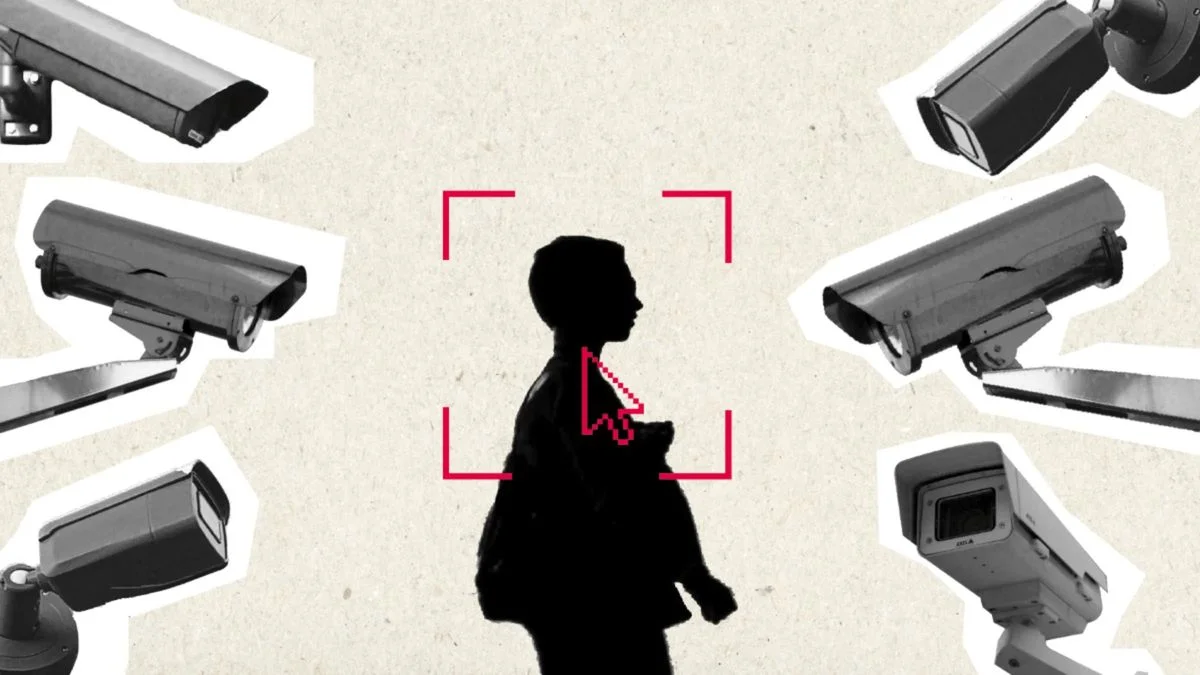
Eyes Unseen: When the Digital Age Watches the Watchers
A Civic-Tech Reflection on Misinformation, Safety, and Surveillance
We live in a time where a single click can ignite a movement — or silently place someone under watch. Digital platforms have become modern public squares, giving young people the power to speak, organize, and challenge injustice. Yet beneath this promise lies an uncomfortable truth: the same spaces that amplify our voices can quietly observe, record, and restrain them. Across the globe, and increasingly within Kenya, digital technologies are no longer neutral tools. They are being woven into systems of control — tracking online behavior, mapping social networks, and shaping narratives long before citizens ever step into the streets. Surveillance today does not always arrive with uniforms or force; it arrives through screens, algorithms, and invisible data trails. Misinformation and disinformation fuel this reality. False stories spread faster than truth, playing on fear, anger, and uncertainty. Artificial intelligence has raised the stakes even higher, blurring the line between what is real and what is manufactured. In this confusion, trust fractures, communities divide, and surveillance finds justification. Young people carry the heaviest burden. Online harassment, identity misuse, account takeovers, and psychological harm are not abstract threats — they are daily experiences. What begins as digital harm often spills into real life, silencing voices and shrinking civic space. Civic technology offers hope. When paired with digital literacy, rights awareness, and ethical design, technology becomes a shield rather than a weapon. It empowers youth to question manipulation, protect their privacy, and reclaim digital spaces as arenas of dignity, truth, and participation. In an age of unseen eyes, courage means choosing visibility with agency, integrity, and care.
Share:
Search Articles
search
edit_note
Share Your Story
Have a field report, community update, or positive story to share? Submit your article draft to be reviewed and featured on our portal!